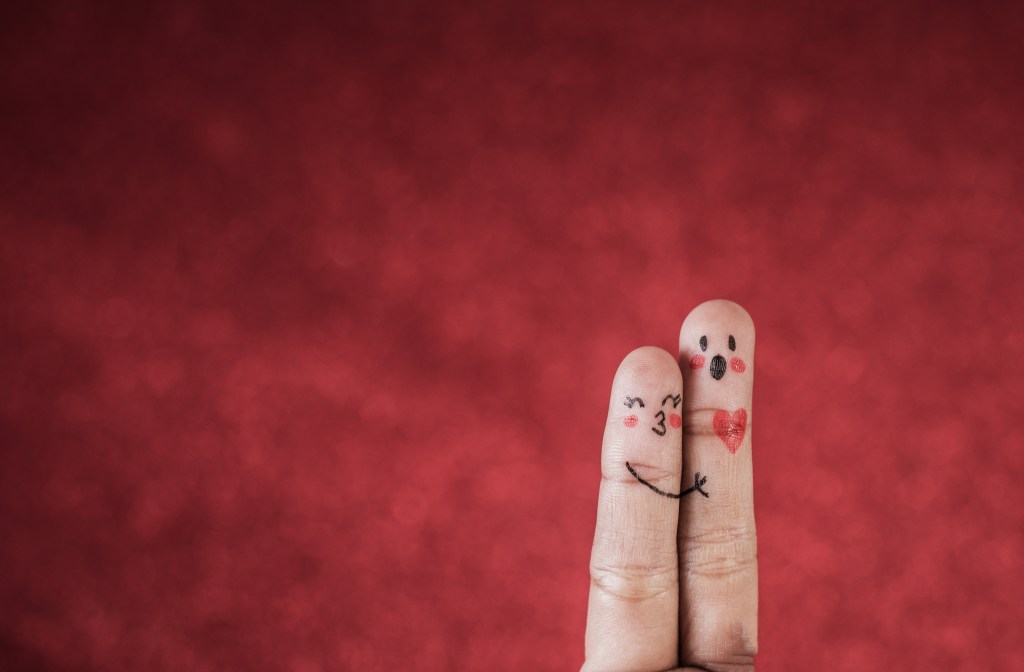
After seeing the Dylan biopic A Complete Unknown, I hauled out my old Bob Dylan CDs and listened to my way-back-when beloved songs, as I suppose many did. I used to like his early work best, but this time I chose Love Sick, a collection of his love songs (and some anti-love songs). This album has one of my favorite songs of any kind, “Make You Feel My Love,” which always brings tears to my eyes, followed by embarrassment that it makes me weep. This go-round, though, the one that gripped me most is called “Love Sick,” in which the singer declares that he is “sick of love.”
The song tells a story, as many of Dylan’s songs do: he is walking the streets after his lover has “destroyed him with a smile.” The final line, after “I wish I’d never met you,” and “I don’t know what to do” is… “I’d give anything to be with you.” In other words, he is tormented by love, he’s bitter, sick-and-tired of it – but he wishes for nothing more than to be in it again. How many have felt this way?
Actually, I have never felt this way, for one. I’ve been lovesick, but not sick of love, or tired of it; I don’t wish I’d never met any person I loved. That’s because my love affairs have always given me more than they took away. What heartbreak left behind was a kind of hidden gift, not to be opened until the love affair was over, and that is…more of myself. And by that, I don’t mean just more knowledge of myself.
If you’ve read my book, Loveland: A Memoir of Romance and Fiction, you might remember that I’ve only been in love with three men in my long life. And no, my ex-husband was not one of them, though we were together for over two decades. In fact, I know I will not end up with any of them, and except for one, I no longer want to.
I study romance as well as feel it, and my experience and observations have shown me that romantic love is both idealized to a silly degree in our culture, yet also often denigrated. Popular songs, movies, greeting cards, and Valentine’s Day exaggerate the lifelong bliss it promises, as if this were a guarantee or entitlement, a freebee that anyone can access. On the other side, serious commentators frequently claim the exact opposite, that passionate love is a game of fools. In their thinking, what romantics really want is the drama of ecstasy and heartbreak, the thrill of the risk or the chase, while “real” happiness lies in calm, contented, mutually supportive, well-aligned partnerships. Though these views contradict each other, both seem to assume their version of the “real” love will last for a lifetime. I don’t see either of these ideas as capturing what love is, as people actually live it.
I do agree there can be both high risk and drama to passionate love, yes. But that isn’t necessarily a negative, unless you believe we can deliberately fall in love according to a rational scheme that provides security against emotional pain. And if you believe you can choose not to fall in love, I agree you can choose to be “content” – maybe – with a domestic arrangement that is more likely – again, maybe – to lessen the pains and risks of life. What both these ideas leave out is that there’s a risk of pain in all human relations, from having a child, to loving without reciprocation, to marriage itself. You can’t take out insurance that you’ll get what you want when you fall in love, and whether you choose the “safe” long-term partner or not, you can lose what you have at any time. People change; events happen. Passionate lovers may be fools, but no foolproof safeguards exist for anyone.
My perspective is that we tend to assume we have more choices about how we love than we do. I think some of us naturally live in an ecosystem of powerful emotions such as falling deeply in love, and some are better fitted for a lower temperature of love that runs along as a steady stream. Those who don’t feel intense romantic love may dismiss it as self-delusion or cultural nonsense, while those who feel passionate love might look down on the calm-and-contented relationship as banal and dull. If you can combine these two (passion first, settled-down for the long term), you have the best of both worlds, but I doubt that describes most relationships, much as we’d like to think so. In general, if there’s anything I’ve learned in my longish life, it’s that we tend to believe what we hear, especially if it confirms what we want to believe.
I don’t see either kind of love as more desirable than the other: besides your temperament, it depends on what means most to you. For me, the one that best expresses my nature is a passion that can’t be chosen or avoided. I didn’t “decide” that; it’s who I am. And I’m not sorry for it. I wouldn’t wish it away, as I would my tendency to worry, or envy my friends.
It’s true that all three love affairs have led me to a Bob Dylan-ish sense of frustration, of sadness, even shame in wanting what I should not want, or longing for what now seems doomed from the start. But I wouldn’t have it otherwise, because every time I was in love, especially when I knew it wouldn’t be the lifelong relationship I’d hoped for, I understood more about the self I was working with. But the gift went beyond this understanding.
All three of these lovers were entirely different in personality, emotional capacities, and most important, the way they related to me, the way we were together. Because of these differences, another piece of me slowly, painfully, emerged each time I fell in love. Each time I surprised myself, in fact shocked myself. Why was I with this person? What did he see in me, and who was I when I was with him? It’s not so much that I “grew” or “grew up” from experience, as that what was already there had readied itself to speak at last, at least to that one person, and afterward, to more. In love, I was like an animal waking up from hibernation; I was hiding in what I had been. As I gradually disclosed who I was at the time to the person I loved (and that was part of why I loved him), I also met the person he saw. And all of those persons they saw (along with the wife I was and the mother and grandmother I am) are who I am now.
And then there are the memories, the bank I can withdraw my own lived pleasure from, no matter what else happened with us.
I’m not dead yet, so there could be more, and if so, let them come. Unlike Bob Dylan’s persona, I don’t hope to forget the ones I loved and lost, and I’m not likely to ever be sick of love.
Image by jcomp at Freepik
 Susan Ostrov
Leave a Reply