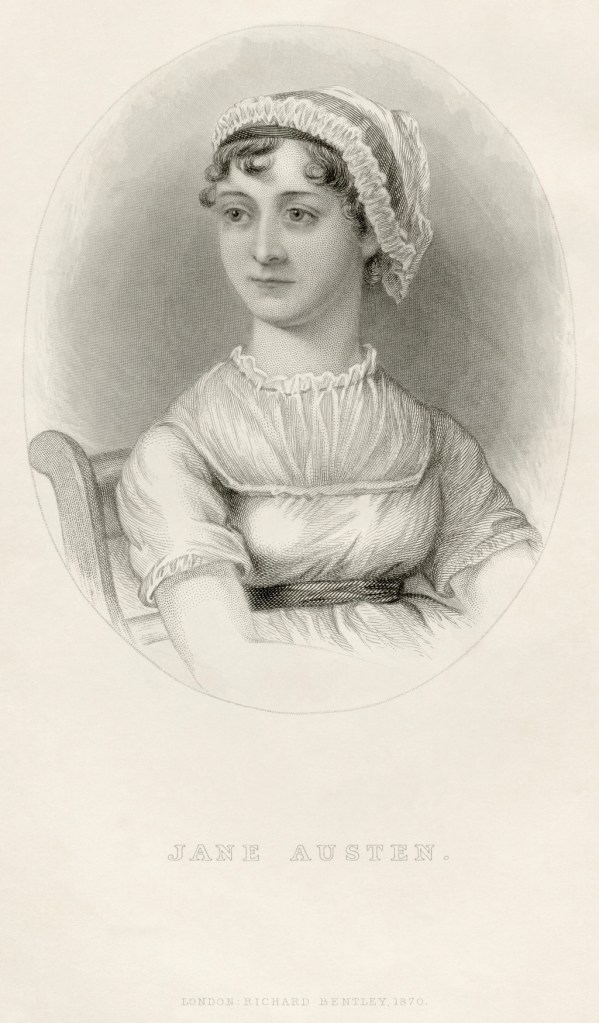
When she was only 14, Jane Austen wrote a novel called Love and Freindship (that’s right, she misspelled it), satirizing the tendency of her time to romanticize both attachments as passionate, “undying love.” In our own time and culture, romantic love is assumed to be the basis for marriage, so it makes sense that we make a sharp distinction between these kinds of relationships – the dreaded statement, “I only love you as a friend, not romantically,” is easily intelligible to most. It’s disappointing to be “put in the friend zone,” because most people know what that means…the feelings someone has for you are “not romantic.” The idiot you love is not going to love you back.
Ironically, in our time friendship is sometimes touted as the basis of romance, even superior to it. I keep bumping into articles such as “Falling in Love Won’t Make You Happy.” Why? The old, old theme: romantic love, which is exciting and can give you intense pleasure, is flimsy and superficial, and worse, might also break your heart. Heartbreak, imagine that! Lifelong friendship is much better for your happiness quotient! My own reaction was…Yes, you are subject to heartbreak in a passionate love affair, duh. Another thought: “This idea is worth an entire article in a prestige magazine?”.
In our modern world, and especially in America, the goal of life is something called “happiness.” This is a quality that the media teaches can be easily taught, if not outright bought. The idea of this article (which you must pay to see) is that any risk you choose in life will destabilize the march to this goal of even, steady happiness, so…don’t fall in love!
Then there’s “The Type of Love that Makes People Happiest” – Hint: it’s not romantic love! Romance is the wrong kind, says the author; the right kind is a marital love based on successful romantic love (he calls that –unromantically — the “starter yeast”) that evolves into long-term friendship. In this article, the aging author tells us how very good his stable, durable, loving marriage has been for him. It really paid off! Terrific for the author and everyone else who manages this, but the wisdom he’s selling is pretty useless for almost everyone: the deep secret to happiness isn’t falling in love, it’s “staying in love”, he says. So…just try staying in love for a lifetime, go ahead. Not necessarily easy? You think?
A closer look at his argument shows that it rests on changing the definition of that famously slippery term “in love” from passion (unstable, intense longing) to the higher ground of a companionable affection, involving enduring intimacy and…yes, friendship. Basically, he chooses to define this domestic love as a state of ongoing “being in love,” for no particular reason other than it worked for him. Because he had both romantic love and friendship, he wants to convince you that you can choose “being in love” for a lifetime too. Apparently, he thinks it’s as simple as that.
Maybe this change from risky romantic love to a stable, sure-thing “being in love” forever with a domestic partner happens by itself? It would be nice if so, but the high rate of divorce proves otherwise. Can you get there by “working” on it, following the endless advice on the internet about how to “keep your love [and your sex life] alive”? All manner of ways to “spark” up the tedium of habitual domesticity are offered, yet…I wonder how much it really helps to get to the state of “staying in love” for your entire life so you can be “happy”. Actually, even friendships do fall apart occasionally, and domestic love changes or vanishes pretty often, since individuals can evolve and grow apart. Sadly, a mate you “stayed in love with” might even be miserable, making you unhappy, or die before you, breaking your heart. And so in reality, the love-based-on-friendship also is a risk for unhappiness.
My point is: if passion is not going to make you happy because it’s a risk, you need to recognize that no relationship is risk-proof. Redefining “being in love” or “staying in love” as a type of friendship that works as a double dip is just not helpful. Having experienced and studied both, my own view is that domestic attachment is a whole different animal than “being in love.” There’s a reason Jane Austen never showed details of her heroines’ marriages: the romantic desire that fueled the novels leads to a future of… well, daily domestic stuff, not exactly what Austen’s readers cared to hear about. On the other hand, passionate emotion may or may not be a reassuring, reliable path to “happiness”, but it has its own unique value for some of us.
 Susan Ostrov
Leave a Reply