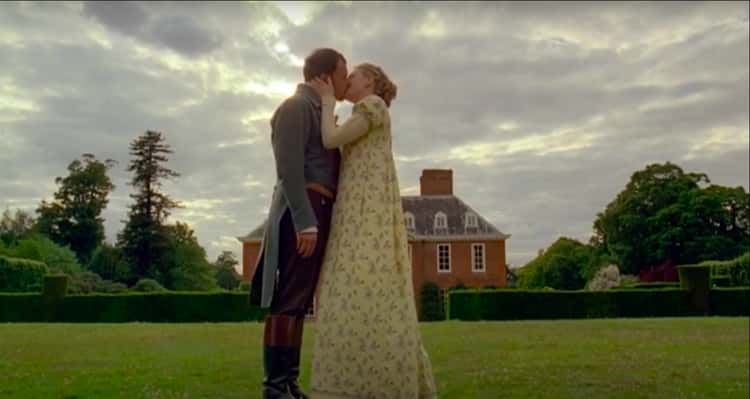
Since I’m a sucker for romance, I’ve been curious about the enormous audience for the streaming show Bridgerton. I couldn’t finish Season One of Bridgerton, as it seemed more silly than funny, but I did get caught up in Season Two, because the triangulation of the sisters and lover was well done. Then I found Season Three all too predictable, so…skipped to the end of that one also. Yet I’m glad I watched the show because it made me think more about the modern idea of romantic love.
Bridgerton’s allure is that it places romance in a nostalgic context that’s just as –maybe more — important than the romance itself: the bygone period when a relatively small inherited caste dominated society, living in luxury, preening in speech, manners, clothing, rituals, and so forth, while modern cities of slums and low-wage work grew unobserved around them. In the show, it’s as if another class does not exist. There are many servants in the big houses of Bridgerton, but none of them count for much in the drama; they’re ornaments that point to the unearned power of the privileged class. The servants have no lives of their own; they live to serve. Oddly, when I saw scenes of servants engaged in…well, serving, all I could think of was how it must feel to live in a world of someone else’s luxury, spending your entire life doing menial work to shore up people, i.e. your “betters”, who never work at all. (I read Octavia Butler’s novel Kindred recently, which directly and powerfully addresses this question in a slave/master relationship.) If you were at the populous lower end of the social hierarchy, you were expected to resign yourself to this state of things as perfectly natural and appropriate. This gaping inequality is idealized in Bridgerton, because it plays on the historical truth that even rich women had to marry, and marry well, to justify their lives. JD Vance would call this fulfilling “their purpose”, the propaganda about women of the Victorian age that followed.
That’s where the romantic element comes in – we see a privileged man and a privileged woman “fall in love”, and that passion appears to be the focus, while in fact it masks the reality of marriage as the reward for individual women’s desirability. While the love is “pure,” spontaneous, magical, the heroines “win” in the end, because they hooked the man and proved their superiority; they are thereby worthy of perpetuating that social caste.
Bridgerton is silly, but viewers enjoy it even while they know it’s silly and unrealistic, or maybe because it is. I would say the same is true for vulgarities like The Kardashians or The Real Housewives series, which also have a mainly female audience. The enjoyment comes from a combination of envy (of wealth, clothing, real estate, bling, etc.), wish fulfillment, celebrity worship, identifying with the “winners” in life, and schadenfreude (pleasure in the shame of others, played out in gossip, spats, verbal abuse, meanness, etc.).
And yes, I do watch the latter shows, and I do partake in all that enjoyment myself. Bread and circuses, you know.
 Susan Ostrov
Leave a Reply